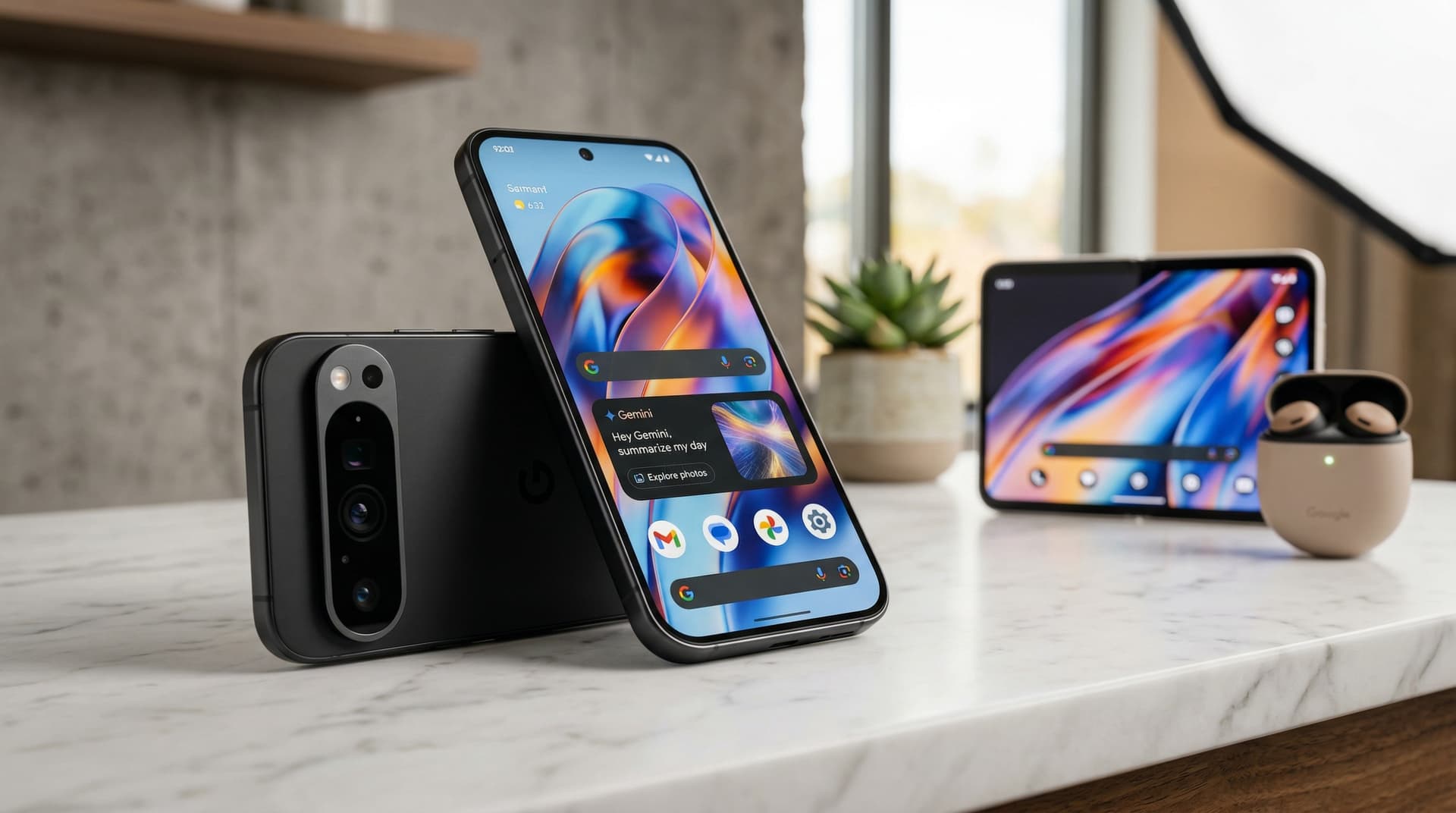
On August 13, 2024, Google held its 'Made by Google' event in Mountain View, California, where it pulled back the curtain on its most ambitious Pixel smartphone lineup yet: the Pixel 9, Pixel 9 Pro, Pixel 9 Pro XL, and the innovative Pixel 9 Pro Fold. This announcement marks a pivotal moment for Google, as it positions the Pixel series not just as premium Android devices but as AI-first powerhouses, leveraging the company's Gemini AI models to redefine user interactions.
A New Era of Design and Build
The Pixel 9 series introduces a refreshed design language with smoother edges, a flatter frame, and a signature camera bar that's been reimagined into an oval-shaped module. The base Pixel 9 sports a 6.3-inch Actua display with a 120Hz refresh rate, peaking at 2,700 nits brightness for stunning outdoor visibility. It's powered by the custom Tensor G4 chipset, promising 20% faster web browsing and improved efficiency over the previous G3.
Stepping up, the Pixel 9 Pro and Pro XL retain compact (6.3-inch) and larger (6.8-inch) form factors, respectively, but upgrade to Super Actua displays with even higher brightness and 1-120Hz LTPO tech for better battery life. Both Pros feature a triple-camera setup: 50MP main, 48MP ultrawide, and 48MP telephoto with 5x optical zoom on the XL. The Pro Fold, meanwhile, unfolds to an 8-inch inner display and packs similar pro-grade cameras into a book-style foldable chassis that's slimmer and lighter at 257g.
All models boast IP68 water and dust resistance, Gorilla Glass Victus 2, and start at 12GB RAM with storage options up to 1TB. Battery capacities range from 4,700mAh on the Pixel 9 to 5,060mAh on the Pro XL, supporting 27W wired and 23W wireless charging.
Gemini AI: The Brain Behind the Pixels
At the heart of the Pixel 9 series is Gemini AI, Google's multimodal model now available in Nano, Pro, and Ultra variants. Pixel 9 owners get Gemini Nano for on-device processing, enabling features like Pixel Screenshots (AI-organized photo albums), Pixel Studio (image generation from text), and Add Me (seamlessly inserting the photographer into group shots).
The Pro models unlock Gemini Advanced (subscription-based), introducing Super Res Zoom Video up to 20x, Audio Magic Eraser for podcasts, and real-time call screening with natural language responses. A standout is Satellite SOS, allowing emergency texts via satellite—expanding on iPhone's feature—available on all models.
Gemini Live offers conversational AI that's interruptible and context-aware, perfect for brainstorming or navigation. During the event, demos showed Gemini summarizing emails, suggesting replies, and even analyzing live camera feeds for shopping or translations.
Camera Excellence Redefined
Google's computational photography remains unmatched. The 50MP main sensor with an upgraded 82-degree ultrawide captures Night Sight Video at 4K, while the 48MP telephoto delivers macro shots down to 5cm. Video Boost leverages cloud processing for 8K upscaling and cinematic pans.
New AI tools like Reimagine let users swap sky or objects in photos, and Best Take swaps faces across burst shots. The Pro Fold's cameras match the Pros, proving foldables needn't compromise.
Pricing and Availability
Pricing starts competitively: Pixel 9 at $799 (128GB), Pixel 9 Pro at $999 (128GB), Pro XL at $1,099 (128GB), and Pro Fold at $1,799 (256GB). Pre-orders began immediately after the event, with general availability from August 22, 2024. Trade-ins and bundle deals with Pixel Watch 3 and Buds Pro 2 sweeten the pot.
How Pixel 9 Stacks Up
Against rivals, the Pixel 9 undercuts Samsung's Galaxy S24 ($859 start) with similar specs but superior AI. The iPhone 15 Pro starts higher at $999, lacking native foldables or satellite until later. OnePlus 12 offers faster charging but trails in camera AI.
The Tensor G4, co-developed with Samsung, prioritizes AI over raw power—Geekbench scores around 1,700 single-core lag flagships like Snapdragon 8 Gen 3, but on-device Gemini efficiency shines.
Ecosystem Integration
These phones integrate seamlessly with Google's ecosystem. Pair with the new Pixel Watch 3 (41/45mm, brighter display, 48-hour battery) for Fitbit-powered health tracking, including loss of pulse detection. Pixel Buds Pro 2 add Gemini access and Clear Calling 2.0.
Android 15 ships out-of-box with seven years of updates, the longest in Android.
Challenges and Criticisms
Not all is perfect. Tensor G4's modem issues from past generations persist, with some demos showing heat during stress tests. Foldable durability remains a question, despite improved hinges rated for 200,000 folds. Gemini Advanced requires Google One AI Premium ($20/month), gating top features.
The Future of AI Smartphones
The Pixel 9 series cements Google's bet on AI ubiquity. By embedding Gemini deeply, it transforms phones into proactive companions—summarizing calls, predicting needs, enhancing creativity. As competitors like Samsung (Galaxy AI) and Apple (Apple Intelligence) race to catch up, Pixel leads with purpose-built silicon.
For gadget enthusiasts, the Pixel 9 isn't just hardware; it's a glimpse of ambient computing. Whether you're upgrading for cameras, AI smarts, or the foldable form, Google's August 13 reveal delivers a compelling package. Head to stores August 22 to experience it firsthand.
Word count: 912