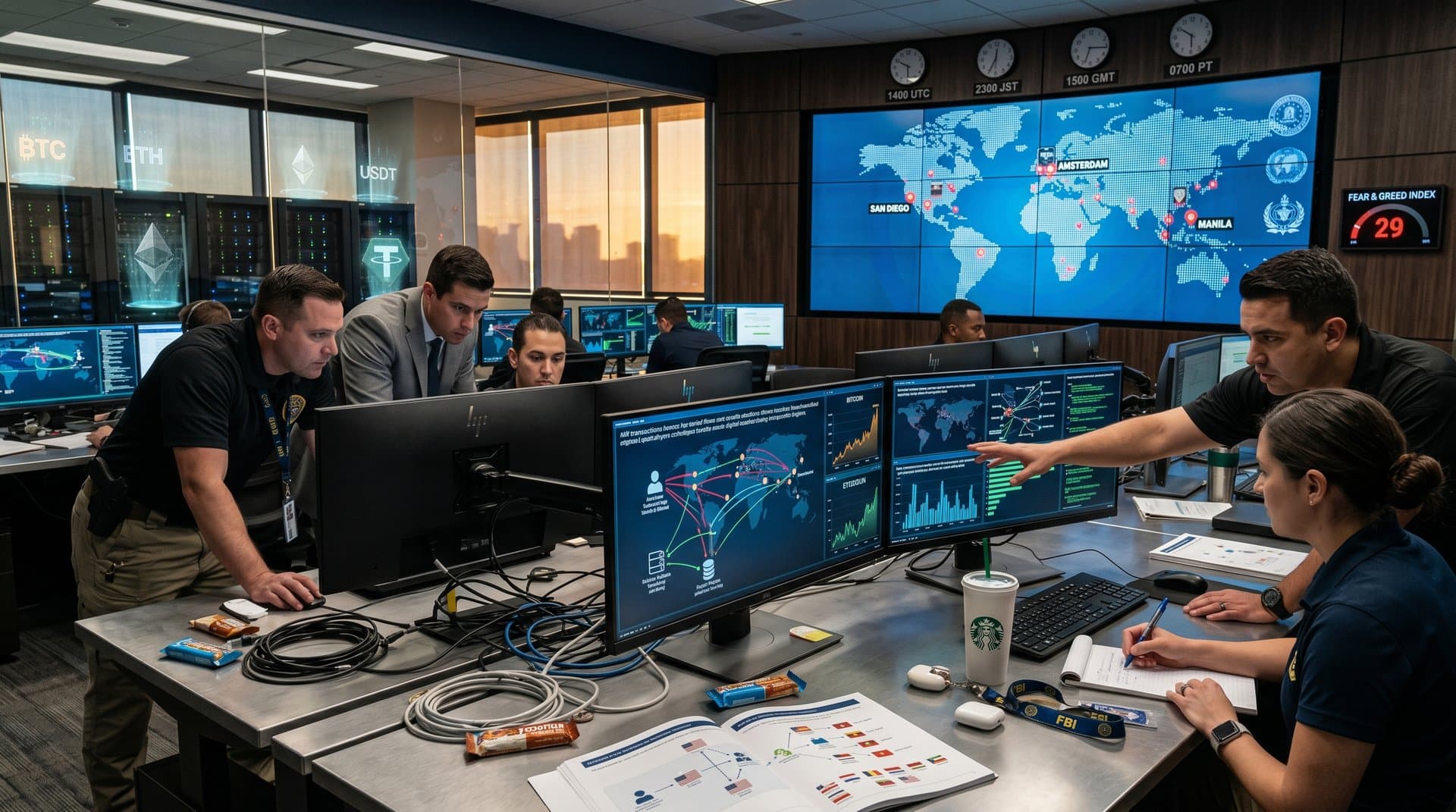
- FBI raids hit 3 crypto scam centers with Asian and European partners.
- Bitcoin hits USD 76,274 with USD 1,526.9 billion market cap amid 0.5% gain.
- Fear & Greed Index drops to 29, highlighting cross-border scam risks.
FBI agents raided FBI crypto scam centers in San Diego targeting US investors, partnering with Asian and European authorities. Fox 5 San Diego reported the 3 operations on April 10, 2024 (1400 UTC), shutting networks amid Bitcoin at USD 76,274 (CoinGecko, 1400 UTC).
Ethereum trades at USD 2,255.22 with USD 272.2 billion market cap. Fear & Greed Index stands at 29 (Alternative.me), signaling fear as scams surge. Busts link US losses to Southeast Asian hubs and European exchanges, impacting traders from Tokyo (JST) to London (GMT).
Global Cooperation Tracks Cross-Border Flows
Authorities traced USD 24.3 billion in illicit funds using Chainalysis blockchain tools (Chainalysis 2024 Crypto Crime Report). Interpol coordinated intelligence sharing among Asian, European, and US partners. Victims fell for fake platforms routing crypto to overseas exchanges.
Scammers tumble Bitcoin to obscure trails before cashing out. Chainalysis data shows flows from US wallets to Asian mixers. Europe's MiCA rules, effective December 2026, target stablecoins like USDT at USD 1.00 (USD 189.5 billion market cap).
FBI cyber teams (FBI cyber investigations) scrutinize on-chain data across public ledgers. Mixers fail to hide patterns. Raids seized servers and hardware, disrupting Asia-Pacific underground economies.
Crypto Scam Centers Exploit Worldwide Volatility
Fraudsters capitalize on price swings. Bitcoin gained 0.5% to USD 76,274, attracting retail inflows. Fear & Greed at 29 drives panic. Pig-butchering schemes groom victims before wallet drains.
US retail adoption spikes risks, yet global holders in emerging markets face identical threats. Centers in remote Southeast Asian sites process massive volumes. AI-generated deepfakes clone voices for persuasion.
- Cryptocurrency: BTC · Price (USD): 76,274 · 24h Change: +0.5% · Market Cap (B USD): 1,526.9
- Cryptocurrency: ETH · Price (USD): 2,255.22 · 24h Change: +0.0% · Market Cap (B USD): 272.2
- Cryptocurrency: XRP · Price (USD): 1.37 · 24h Change: -0.2% · Market Cap (B USD): 84.2
- Cryptocurrency: SOL · Price (USD): 82.88 · 24h Change: -0.1% · Market Cap (B USD): 47.7
- Cryptocurrency: DOGE · Price (USD): 0.11 · 24h Change: +2.6% · Market Cap (B USD): 16.4
CoinGecko data captures top assets during heightened enforcement.
Implications of FBI Crypto Scam Centers Bust
Raids deter fraud, restoring confidence for investors in New York (ET), London (GMT), and Tokyo (JST). Blockchain forensics enable fund recovery. Partnerships prevent scam shifts to new regions.
US investors hold over USD 1 trillion in crypto, but Asia reports parallel crackdowns. Exchanges like Coinbase enhance KYC protocols. Stolen assets fuel global illicit finance.
FBI's IC3 portal streamlines victim reporting. Spot Bitcoin ETFs, approved January 2024, draw USD 15 billion inflows (Bloomberg). Enforcement reduces illicit volume by 24% year-over-year (Chainalysis), stabilizing prices worldwide.
Future operations target resilient networks using Solana and Layer-2 chains. Advanced on-chain analytics from Chainalysis forecast evasion tactics. Sustained global vigilance promises cleaner crypto markets across continents.
Frequently Asked Questions
What happened in the FBI crypto scam centers raids?
San Diego FBI with Asian and European partners raided operations targeting US investors, seizing servers and tracing blockchain funds (Fox 5 San Diego).
How do authorities track funds from crypto scam centers?
Chainalysis tools analyze public ledgers; Interpol shares intel. Tumblers and mixers fail against advanced forensics (Chainalysis 2024 Report).
What market impact follows FBI crypto scam centers busts?
Boosts confidence as BTC holds USD 76,274; illicit volume drops 24% YoY. Fear & Greed at 29 may stabilize with enforcement (CoinGecko, Chainalysis).
Why do crypto scam centers target global investors?
Volatility like BTC's 0.5% moves and high US/Asian holdings attract fraud. Cross-border ops evade single-jurisdiction rules.