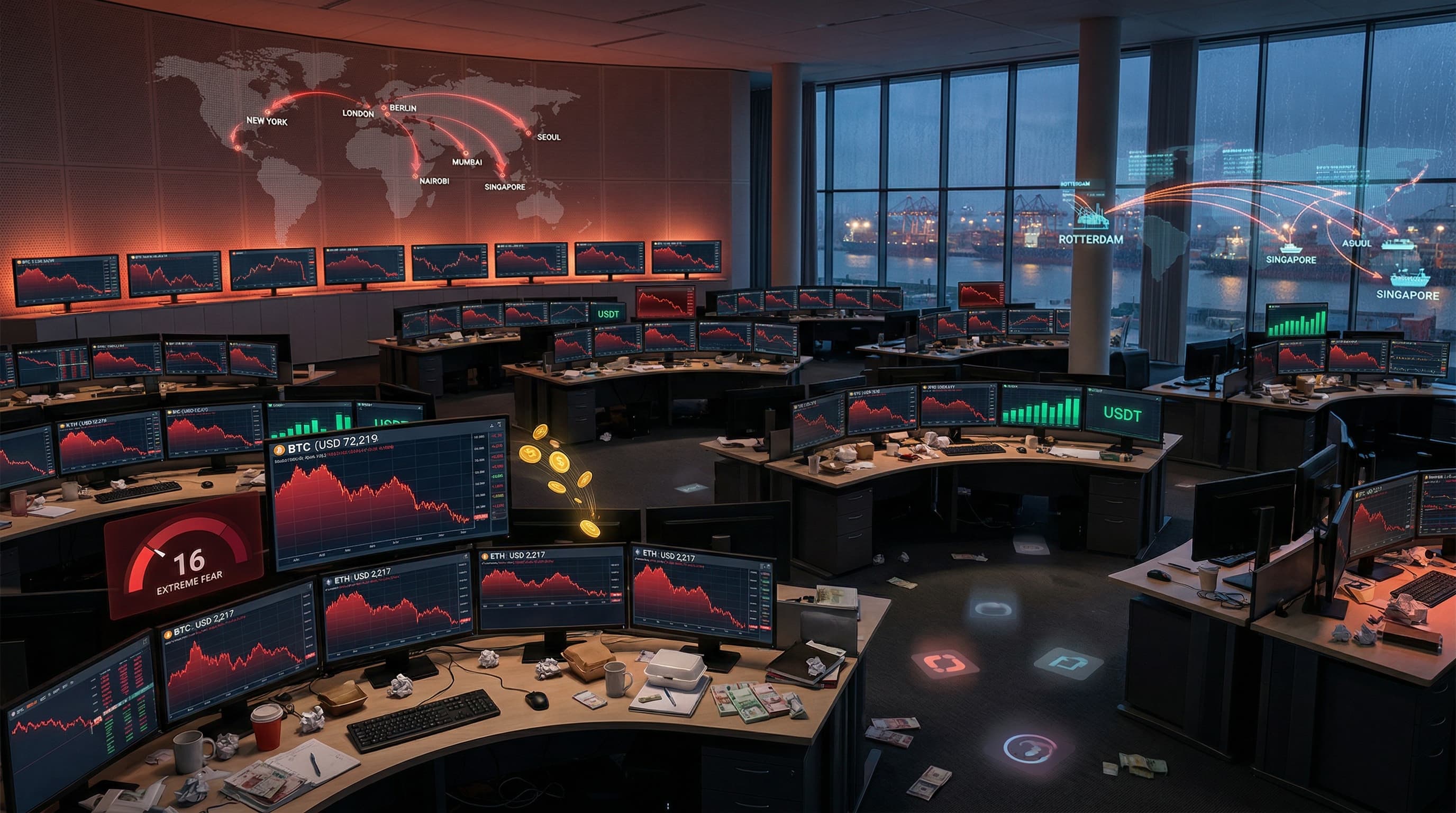
Crypto market crash on April 10, 2026, ignited a global divide on Bitcoin dip buys. BTC rebounded 2.8% to USD 72,968 as Fear & Greed Index hit 16, signaling extreme fear. Retail traders bought in; economists urged restraint.
The cryptocurrency market shed 15% over the past week, per CoinMarketCap data. Stablecoin USDT held at USD 1.00. Ethereum rose 3.3% to USD 2,242.77 amid the rebound.
Traders in Asia led the charge. Platforms like Binance reported 40% higher volume from Singapore and Tokyo users. XRP gained 1.9% to USD 1.36 as cross-border payments picked up.
After Crypto Market Crash: Global Retail Rush
Retail investors viewed the dip as a bargain. In Nigeria, P2P Bitcoin trades surged 25% on LocalBitcoins, according to Chainalysis April 10 report. Users there hedge against naira volatility.
Brazilian traders piled into BTC via Mercado Bitcoin. Volumes hit 500 million BRL (USD 90 million) on April 10. They eye crypto as an inflation shield amid real at 5.67 BRL per USD.
Economists pushed back hard. IMF's Gita Gopinath warned in a Geneva speech that crypto volatility threatens emerging market stability. She cited El Salvador's BTC adoption risks.
European Central Bank's Isabel Schnabel echoed this. She noted in Frankfurt that retail frenzy ignores systemic risks. Eurozone banks face contagion if crypto crashes deepen.
Transmission Through Trade Corridors
Crypto flows now link global remittances. Filipino workers in Saudi Arabia sent USD 200 million in BTC equivalents last month, per World Bank data. The crash halved transfer fees temporarily.
Indian exchanges like WazirX saw 30% user growth from rural areas. Farmers use USDT to bypass rupee swings against USD at 83.45 INR. BNB climbed 1.3% to USD 607.70 on Binance Chain activity.
Supply chains feel the ripple. Crypto miners in Kazakhstan cut energy use 20% after the crash, says Cambridge Centre for Alternative Finance. This eases grid strain but slows hash rate.
US firms route payments through Singapore hubs. The dip cut transaction costs 12%, per Elliptic blockchain analytics on April 10. Traders there arbitrage USD-BTC pairs.
Data Snapshot Grounds the Debate
| Asset | Price (USD) | 24h Change | |-------|-------------|------------| | BTC | 72,968.00 | +2.8% | | ETH | 2,242.77 | +3.3% | | USDT | 1.00 | +0.0% | | XRP | 1.36 | +1.9% | | BNB | 607.70 | +1.3% |
Fear & Greed Index from Alternative.me stood at 16. This matches 2022 lows. Trading volume hit USD 85 billion across exchanges.
Retail platforms dominate. Robinhood reported 15% new crypto accounts in the US on April 10. eToro saw similar spikes from UK and Australian users.
Institutional caution prevails. BlackRock's iShares Bitcoin Trust saw USD 150 million outflows, per ETF.com data. Hedge funds in Dubai trimmed positions by 10%.
Cross-Border Policy Responses Emerge
Singapore's MAS tightened crypto licensing on April 10. They target retail overexposure after volumes spiked 35%. Traders now face higher KYC hurdles.
China's informal ban holds firm. Yet Hong Kong exchanges onboarded 50,000 mainland users via VPNs, Chainalysis estimates. BTC flows there rose 18%.
US SEC probes dip-buying apps. Commissioner Gary Gensler flagged pump risks in a Washington statement. Retail apps must disclose volatility warnings.
India drafts crypto tax hikes. Finance Ministry eyes 30% levy on gains post-crash. This aims to cool retail frenzy in Mumbai trading hubs.
Tech Angle: Blockchain Resilience Tested
Ethereum's layer-2 solutions handled 1.2 million transactions on April 10, per L2Beat. Fees dropped to USD 0.15 average. This draws cost-conscious traders from Solana.
Bitcoin's Lightning Network scaled to 5,000 BTC capacity. African users in Kenya process USD 10 million daily micropayments. Crash proved network uptime at 99.9%.
AI trading bots gained traction. Singapore startups like 3Commas reported 60% user adoption. They scan Fear & Greed signals for automated dip buys.
Fintech bridges traditional rails. Revolut in London added BTC pairs for GBP users. Volumes hit GBP 200 million (USD 252 million) amid the rebound.
Affected Parties Map Out Impacts
Exporters in Vietnam use USDT for garment payments. Crash volatility delayed USD 50 million settlements, per Vietnam Customs data. Importers in Rotterdam wait longer.
Consumers in Argentina hoard BTC. With peso at 950 ARS per USD, crypto evades 211% inflation. Retail buys offset 20% of monthly outflows.
Governments monitor closely. Brazil's Central Bank tests CBDC pilots. They view crypto crash as a nudge toward digital real adoption.
Startups thrive in chaos. Crypto lending firm Nexo in Bulgaria expanded to 190 countries. They offer 12% APY on BTC deposits post-crash.
What's Next After Crypto Market Crash
Markets eye US inflation data on April 11. A hot CPI could extend the crash. Fed rate hints will sway USD strength against BTC.
Retail traders bet on halving echoes. Bitcoin's April 2024 event still influences sentiment. Analysts at Glassnode predict USD 80,000 resistance.
Economists call for global coordination. BIS in Basel pushes stablecoin rules. This targets USDT dominance in cross-border flows.
The divide persists. Retail in Jakarta and Lagos buys dips. Think tanks in Davos warn of bubbles. Crypto streams onward, connecting Tokyo to Buenos Aires.